Belgian physical conditioning coach Edgar Khanoyan has spent the past decade redefining what it means to prepare fighters for the highest levels of boxing. Born on 7 September 1996 in Moscow, the former amateur boxer turned performance coach leads athletes through grueling programmes that blend tradition with cutting‑edge science. After competing himself, Khanoyan earned a bachelor’s degree in Sport Coaching and shifted from the ring to the training gym, focusing on developing strength, endurance, explosiveness, and injury‑prevention strategies for professional fighters. The result of that journey is the EXOR method, his proprietary system that trains boxers to be both explosive and resilient, a formula that is now attracting attention beyond Belgium.
Khanoyan’s path began in 2013 when he entered the boxing world as a competitor, giving him first‑hand insight into the sport’s technical and mental demands. By 2019, he shifted into full‑time coaching, taking on the role of Head of Physical Preparation for fighters competing on international stages. He refined his knowledge at university, studying sports physiology, biomechanics, and periodization. That education shaped a philosophy that emphasizes long‑term development, injury‑free performance, and precision training. Every programme he designs is tailored to a fighter’s style and fight calendar, balancing power, endurance, speed, and recovery.
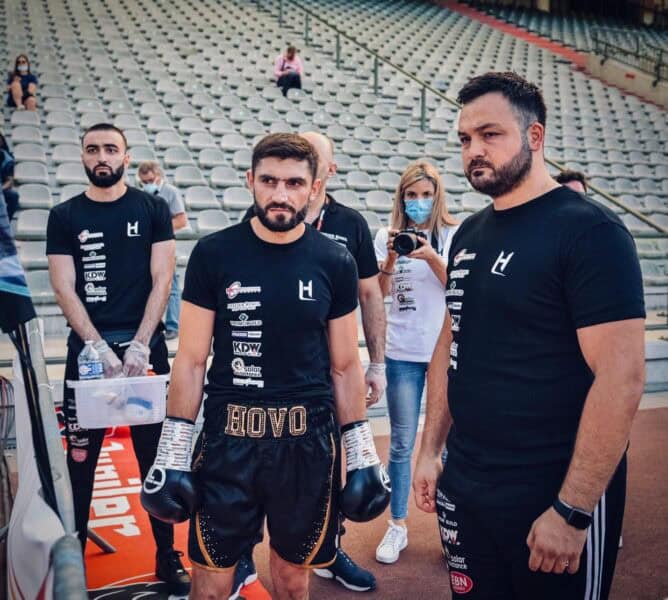
While building individualized training plans, Khanoyan noticed a gap between raw strength programmes and the stamina demands of championship boxing. Fighters needed explosive bursts of power but also the endurance to maintain pace through twelve punishing rounds. To close that gap, he created the EXOR Method, a training protocol that systematically builds explosiveness (EX) while optimizing Oxygen (O) utilization and accelerating Recovery (R). The method combines plyometric drills, high‑intensity interval training, strength complexes, and mobility work, sequenced to push athletes to their anaerobic threshold while improving their aerobic base. Unlike generic high‑intensity circuits, EXOR uses periodized cycles that progressively overload the nervous system and muscles, allowing athletes to peak at fight time without suffering over‑training injuries.
In practice, an EXOR camp might include explosive medicine‑ball throws, contrast‑load squats, sprint intervals on assault bikes, and specialized core routines to stabilize punching mechanics. Recovery sessions emphasize breathing techniques and mobility to maintain elasticity and avoid overuse injuries. The method’s success stems from its holistic approach: building explosiveness, enhancing endurance, and ensuring resilience so fighters can deliver full‑power combinations in the later rounds. This blend of science and tradition has become Khanoyan’s signature.
Khanoyan’s athletes provide visible evidence of the EXOR method’s effectiveness. Super‑featherweight contender Miko Khatchatryan has worked with Khanoyan since 2019 and has captured multiple international titles. Under Khanoyan’s guidance, Khatchatryan won fights against Filip Poturovic, Brayan Mairena, Nadzir Bakhshyien, and Michael Pappoe, claiming the IBO International Super Featherweight title in 2021. Even when he lost a unanimous decision to Joe Cordina in Liverpool in 2021, observers noted how the Belgian’s conditioning allowed him to push the world champion the full distance. Khatchatryan bounced back to win more title fights, including victories over Yader Cardoza and Luis Millan, and captured the IBF International Super Featherweight belt in February 2025.
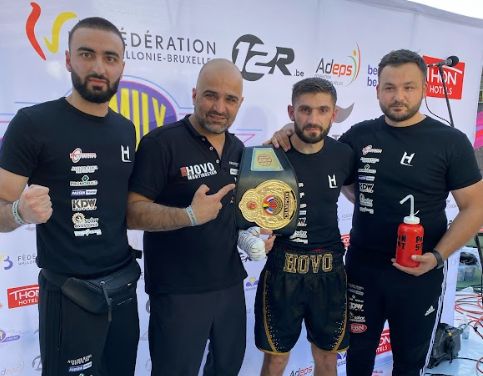
The method’s impact is equally evident in Hovhannes Martirosyan, a super‑lightweight fighter ranked in the world top 50. Khanoyan became his head of physical preparation in 2020 and guided him through wins for the Belgian Federation Welter title and the WBC Francophone Super Light title. In March 2024, Martirosyan travelled to Birmingham, England, to face Pierce O’Leary, a Queensberry‑promoted boxer known for explosive power. Although Martirosyan lost by knockout, UK commentators noted how his strength and conditioning kept him competitive and how he absorbed heavy shots without fading. The performance drew attention to Khanoyan’s training system. Later that year, Martirosyan returned to win a unanimous decision over Miguel Cesario Antin and then captured the IBO Inter‑Continental Super Light belt in March 2025. Observers credited his renewed explosiveness and stamina to the EXOR program he followed between fights.
Beyond these headline names, Khanoyan works with members of the Belgian Olympic National Boxing team, including Rasul Tisayev and Arigon Avdimetaj, providing strength and conditioning support for international competitions. Each athlete follows an iteration of EXOR tailored to their weight class and technical style. The common thread is improved power output and reduced injury downtime.
Word of Khanoyan’s results has begun to spread across Europe. Trainers from clubs in France, Germany, and the Netherlands have contacted him to learn about the EXOR method, and some have incorporated elements of his programming into their own camps. What distinguishes EXOR from other regimes is its balance of high‑intensity power work with robust aerobic conditioning. By developing fast‑twitch muscle fibres without sacrificing endurance, athletes maintain punching velocity deep into fights. This combination is increasingly attractive to competitive clubs seeking a scientific edge.
The method’s popularity is also driven by its adaptability. Khanoyan notes that EXOR can be scaled for different sports, such as swimming, gymnastics, football, and ice hockey. He has begun advising strength coaches in kickboxing and mixed martial arts on how to integrate explosive strength cycles with energy‑system development. As more fighters show up on fight night leaner, stronger, and with gas tanks that last, the demand for EXOR’s secrets continues to rise.
Khanoyan’s vision extends beyond training individual champions. He plans to open a high‑performance centre where athletes and coaches from around the world can learn the EXOR method firsthand. The facility will blend boxing tradition with sports science, offering seminars on biomechanics, nutrition, and psychology. Khanoyan also aims to mentor up‑and‑coming strength coaches, sharing the methodology so more fighters can benefit. By codifying EXOR into a repeatable curriculum, he hopes to elevate the level of athletic preparation across combat sports.
Throughout his journey, Khanoyan’s core message remains consistent: discipline and intelligent preparation unlock human potential. He emphasizes that talent means little without patience and persistence. The EXOR method embodies that ethos, demanding that athletes commit to structured training cycles and embrace the grind when motivation wanes. The pay‑off is evident every time a fighter powers through the final round of a title bout with explosive combinations.
As boxing evolves, the importance of scientific conditioning cannot be overstated. Edgar Khanoyan’s EXOR Method stands at the intersection of tradition and innovation, merging the grit of boxing’s past with modern performance science. By developing a system that builds explosiveness and endurance simultaneously, Khanoyan has given his fighters a measurable edge, and the boxing world is taking notice. With plans to expand EXOR’s reach through training camps and educational programmes, he is poised to influence the next generation of coaches and athletes. In the quest to build champions, it turns out the secret may be in the science.