

Factories are no longer defined only by steel, labor, and routine—they are becoming ecosystems where machines learn, robots adapt, and decisions are made in real time. Across industries, automation is evolving into something more than speed: it is now about intelligence, sustainability, and resilience. Market analysts project that the industrial robotics sector will exceed $165 billion by 2030, with AI-driven systems accelerating adoption in every major industry.
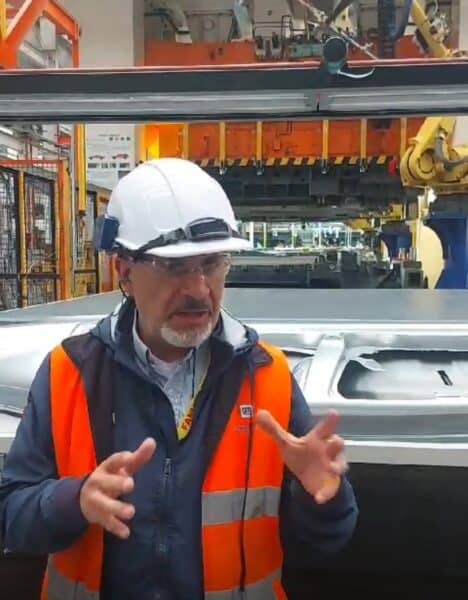
Amid this transformation, manufacturing systems engineer Omar Fonseca has spent nearly three decades proving how robotics and AI can be woven into everyday operations. As he reflects: “In manufacturing, no two days are ever the same. A new problem appears, or a process shifts, and that constant change is what makes the work both challenging and rewarding. It’s also why robotics and AI are essential—they give us the adaptability to keep improving.”
Omar’s journey leading global projects at General Motors and, more recently, consulting for IFAB Corporation, reflects both the promise and the reality of industrial automation. His career offers insights into how factories worldwide can embrace robotics and AI not as replacements for human skill, but as partners that unlock new levels of efficiency, safety, and environmental responsibility.
Robotics Integration in Assembly Lines
When Omar first turned his attention to robotics on the shop floor, he was less interested in replacing human labor than in designing systems where people and machines could complement each other.
Fonseca’s role at GM Colmotores shows how robotics integration could set lasting standards for the industry. He helped expand passenger vehicle output from 15 to 23 units per hour and introduced poka-yoke devices that embedded error prevention directly into workflows and integrated across departments. An example of how these redesigns were of major significance in the field is that they became models referenced across GM’s global plants.
Reflecting on the challenge, Omar explains: “When you work to expand a line, the first thought is always about speed, but real success comes from balance. I had to align people, machines, and flow in a way that each station supported the next. Robotics gave us consistency, but it was the human teams who made sure the transition worked. Seeing the first cars come through on schedule proved that the combination of people and automation can achieve goals that neither could reach alone.”
His time overseeing automation in the Engine Assembly and Instrument Panel Sub-Assembly Lines further reinforced this idea. By introducing robotic sub-systems, he reduced manual operations while improving accuracy.
Yet he highlights that automation is never plug-and-play: “Every robot needs context—what role does it play, what environment does it work in, and how do people interact with it? In one project, we learned that giving operators ownership of the robotics setup made the integration smoother and the results better. For me, robotics is not just about machines moving faster, it’s about building an ecosystem where people and technology are aligned.”
In the paint shop, robotic systems not only improved precision but also redefined how efficiency and sustainability could be achieved together.
Perhaps the most vivid example of Omar’s robotics vision came during his tenure as Paint Shop Superintendent. He led the installation of advanced robotic booths for color application and integrated systems to recycle solvents. These innovations saved millions in material costs while reducing environmental impact.
As he recalls: “I remember walking through the paint line after the robotic booths were installed. The coatings were perfectly uniform, and the overspray was almost gone. But the real achievement was in sustainability—introducing a thinner regeneration system that reused solvents and cut costs dramatically. Robotics here was not only a matter of quality, it was about showing that manufacturing could also protect the environment.”
Industry peers underscore how significant these contributions were.
Carlos Alberto Morimitsu, a former Manufacturing Superintendent at GM Colmotores, highlights Omar’s role in reshaping production through robotics: “Omar was at the forefront of automation initiatives that changed the way we built vehicles. His leadership in automating both the Engine Assembly Line and the Instrument Panel Sub-Assembly Line was transformative—throughput increased, safety improved, and consistency reached new levels. These projects became models for other facilities in the region.”
An example of how Omar has had wider impact and influence with his work in the industry is that his robotics initiatives not only transformed operations in Colombia but were later used as models in other plants across South America. They exemplify how robotics integration boosts throughput, reducing errors, and advancing sustainability in ways that ripple across industries.
As Omar puts it: “When we use robotics only for speed, we miss the point. The real power is in combining robotics with thoughtful design, so every process—from assembly to painting—becomes more reliable, safer, and better for the environment. That’s how factories evolve into systems that can face tomorrow’s challenges.”
From Predictive Maintenance to Smart Decision-Making
Artificial intelligence is fast becoming the backbone of decision-making, maintenance, and quality control. In manufacturing, predictive analytics powered by AI is shifting operations from reactive problem-solving to proactive prevention. Omar championed predictive maintenance early, embedding AI into quality and compliance systems.
During his tenure as Plant Assistant Manager, Omar piloted this shift by embedding AI-driven models into predictive maintenance systems. These tools analyzed streams of equipment data in real time and forecasted when machines were likely to fail.
His models improved Mean Time to Repair and Mean Time Between Failures by 25 percent while supporting transitions to ISO 9001:2015 and ISO 14001:2015. An example of how his predictive maintenance systems were of major significance is that they set new benchmarks later adopted across GM’s global network.
Omar describes it this way: “Predictive systems give you a kind of foresight you can’t achieve otherwise. If you can identify a failing motor or bearing before it breaks down, you don’t just save a machine—you keep the whole operation flowing without unexpected stops. That reliability builds confidence across the plant.”
The integration of AI extended beyond maintenance. In his years as Quality Operations Manager, he led the adoption of ISO 9001:2015 and ISO 14001:2015 standards, strengthening compliance by embedding statistical process analysis with AI-powered monitoring.
His Linked List project—recognized at the 2017 Global Manufacturing Awards—illustrated how AI could align quality databases with international standards, influencing practices far beyond a single plant.
Omar reflects: “Quality used to mean reacting to errors. Now, with data-driven tools, you can see variations before they become defects. That change is powerful because it prevents problems rather than chasing them.”
He further explains: “When you connect information properly, it becomes a living system. Instead of each site working in isolation, you create shared intelligence that benefits everyone in the chain.”
A critical theme across these initiatives is his insistence that technology must always serve people. Omar stresses: “Artificial intelligence is not about replacing human judgment. It’s about giving teams better tools to make decisions. The real challenge for leaders is to keep studying, keep learning the regulations, and keep showing people how to apply these lessons every day.”
By blending predictive analytics with a culture of continuous learning, Omar has helped reframe AI in manufacturing as more than a technical upgrade—it is a mindset shift toward smarter, faster, and more resilient decision-making.
Leading Teams in the Age of Automation
Leading more than 400 employees at GM Colmotores, Omar maintained one of the best safety records in the region. But his leadership extended beyond metrics.
Omar explains: “I always preferred to be seen as a leader rather than a boss. A boss gives orders, but a leader listens, shares responsibility, and works alongside the team. When people feel heard, they solve problems with energy and ownership.”
Through GM’s Manufacturing University, he trained over 500 employees and certified 25 engineers in Six Sigma annually. Moreover, peer reviews praised his ability to combine technical rigor with mentorship, building a pipeline of leaders who later advanced into global roles.
On mentoring, Omar adds: “The best solutions often come from the shop floor. Listening to operators is not a courtesy—it’s essential. Many times, they had the answer long before management noticed the problem.”
Alejandra Trucco, HR Manager at GM, affirms this style: “Omar’s contributions were exceptional in scale and impact. He not only drove compliance with global standards but also created environments where employees felt part of continuous improvement. His leadership in training and safety set benchmarks across our operations.”
An example of the specific significance of his contributions is how Omar’s leadership style—combining mentorship with technical rigor—changed practices across GM, shifting training programs into engines of innovation rather than compliance exercises.
Consulting and Current Impact at IFAB
After his tenure at GM, Omar brought his expertise into consulting, currently advising IFAB Corporation, a U.S.-based leader in advanced metal fabrication. His Value Stream Mapping reduced cycle times by 18 percent and freed space for additional lines, while his KPI dashboards became a plant-wide standard.
He explains: “Consulting gives me the chance to transfer decades of experience into new contexts. Each company has its own culture, so the first challenge is always building trust. Once teams see results—shorter lead times, fewer defects—they embrace the change.”
In addition to being reports, executives point to his evaluations as frameworks shaping operational culture across teams and influencing decisions beyond IFAB’s walls.
Andres Ochoa, Manufacturing Director at IFAB, endorses Omar’s critical role: “Omar is already essential to the IFAB. His evaluations guide our strategic investment decisions, and his Lean efforts are transforming our operations. Bringing him on board full-time was critical to expanding these benefits and maintaining our competitiveness.”
Through consulting, Omar demonstrates how knowledge gained in one global organization can ripple outward, impacting new industries and markets.
Global Impact and Peer Recognition
Recognition for Omar’s contributions has never been limited to the four walls of a single plant. Over the course of his career, his projects have received global certifications and awards that underscore both technical mastery and wider industry influence.
A prime example is General Motors’ BIQ III and BIQ IV certifications, which recognize the highest standards of Built-In Quality across global facilities. Omar’s leadership was central to achieving these milestones at GM Colmotores, setting benchmarks for assembly consistency and quality assurance that placed the Colombian operation among the top performers worldwide.
Industry peers also recognized his pioneering initiatives through the 2017 Global Manufacturing Awards, where Omar’s team earned second place for reducing field quality issues by 35% through data-driven problem solving. This achievement highlighted the global impact of his work—translating AI-assisted analytics into measurable quality gains, a shift that influenced how other plants in the network approached defect prevention.
Omar recalls: “The award was gratifying! But more important was seeing how the methodology spread across plants. That told me our work wasn’t just local—it was changing practices across the industry.”
Sustainability has also been a recurring theme in Omar’s recognition. His paint shop innovations, including thinner regeneration systems and primer reduction, earned Bogotá’s District Environmental Excellence Award (PREAD) for measurable improvements in resource efficiency and emissions reduction.
For Omar, such recognition reinforced a principle that had guided his career: “Factories don’t exist in isolation. They touch workers, families, and entire communities. Every time we cut waste or reduce emissions, we’re proving that industrial excellence and environmental stewardship can go hand in hand.”
Beyond awards, Omar’s influence has extended through roles as a mentor, trainer, and evaluator of peers. Between 2014 and 2022, he participated in GM’s Extraordinary Leadership program, where he was entrusted with formally evaluating senior engineers—professionals considered among the company’s top global talent. This peer-review responsibility was more than a professional accolade; it positioned Omar as a standard-setter for innovation and operational excellence across multiple regions.
Carlos Morimitsu, former Manufacturing Superintendent at GM Colmotores, underscores this impact: “Omar has been at the forefront of some of the most ambitious initiatives in South America—automation of the engine and instrument panel lines, BIQ IV certification, environmental sustainability projects. What distinguished him was not only the technical outcomes but the way he elevated the standards for everyone around him. His evaluations and mentorship created a ripple effect, raising performance benchmarks across the company.”
Across these recognitions, a clear theme emerges: Omar’s ability to merge innovation with compliance. His contributions do not remain confined to his immediate projects. They influence practices, shape culture, and raise expectations across industries and geographies.
His career demonstrates how one engineer’s innovations can resonate globally—transforming assembly lines, redefining quality systems, and advancing sustainability in manufacturing.
Preparing for the Next Stage of Industrial Automation
Omar believes that industrial automation is moving into a stage where robotics, artificial intelligence, and advanced data analytics will converge to redefine global manufacturing.
Analysts project that by 2035, interoperable robots will be capable of handling nearly half of routine shop-floor tasks, with AI driving precision in monitoring, logistics, and predictive maintenance. For industries facing shrinking labor pools and growing sustainability mandates, this transformation is survival.
Omar highlights that the coming years will test factories’ ability to adapt, making resilience the central challenge: “The way I see it, automation is no longer about faster production. It’s about resilience. Companies that combine robotics with real-time data and AI will be the ones capable of adapting to disruptions in supply chains, shifting customer demand, or stricter environmental rules. Those who resist change risk being left behind in a more competitive global market.”
A major frontier is autonomous logistics and inspection, where drones and mobile robots equipped with AI are expected to become standard. Omar already advises companies on these transitions, helping them pilot inspection drones that can identify wear, corrosion, or hazards before they escalate into costly breakdowns.
He explains: “Inspection with drones is not futuristic anymore, you see it happening today. What matters now is integrating those tools into the broader system, so the insights flow directly into predictive models and maintenance plans. That’s when a factory becomes truly intelligent.”
Omar sees the next wave of industrial automation driven by collaborative robots, drones monitoring quality in real time, and edge computing that processes data directly on the factory floor. For him, the real opportunity is in linking these technologies with human oversight so that factories remain both agile and safe.
Omar reflects: “Robots will continue to grow more autonomous, but the bigger breakthrough is how they’ll work with people. A robot might track every torque value or weld bead with precision, but humans bring the creativity to redesign processes and solve unexpected challenges. The future is about blending both strengths, not replacing one with the other.”
Underlying this outlook is a call for leaders to invest not only in hardware and software, but in people. His experience building training academies at GM and mentoring engineers at IFAB underscores the importance of equipping the workforce to thrive in an AI-driven environment.
Omar stresses: “You can’t prepare a factory for the future without preparing the people who run it. Change creates uncertainty, but if you build trust, teach continuously, and show the benefits clearly, teams will embrace innovation instead of fearing it.”
By framing automation as a human-centered transformation, Omar aligns with a growing industry consensus that the factories of tomorrow will succeed not by sidelining people, but by empowering them with smarter tools.
His perspective positions automation not just as faster machines but as smarter, greener ecosystems.
Building Toward Seamless Operations
Reflecting on his career, Omar emphasizes that industrial automation is always about both people and machines
He says: “When I look back, the real achievement has not been a single project or award, but building environments where people could learn, share, and innovate together. If you create that foundation, the technology—whether robotics or AI—can flourish, because the people operating it understand the purpose behind it.”
Across decades of work, Omar has demonstrated that robotics and AI can enhance efficiency without compromising on people or sustainability. His legacy is built on practical achievements: boosting productivity by automating entire assembly lines, introducing predictive systems that saved companies millions, and driving sustainability practices that earned recognition from both government and industry. Likewise, his work at General Motors, IFAB, and other organizations has left behind leaders, engineers, and operators who carry forward the lessons of his mentorship.
Today, as he steps into roles that shape the future of global manufacturing, Omar’s influence continues to grow. His unique blend of foresight and human-centered leadership provides a blueprint for implementing Industry 4.0 responsibly—an influence now felt across international plants and future-ready factories.
Omar reflects: “Automation is about creating factories that are smarter, greener, and more human. To achieve that, leaders need to invest equally in technology and workforce training, so both evolve together. The next generation of manufacturing leaders must see beyond efficiency metrics. They need to see the human impact of every process and the responsibility to innovate responsibly.”
With those words, he closes not just a chapter of past achievements, but offers guidance for how tomorrow’s factories can combine robotics, AI, and human ingenuity effectively. The key is designing systems where data flows directly into decision-making and people have the skills to act on it.

